
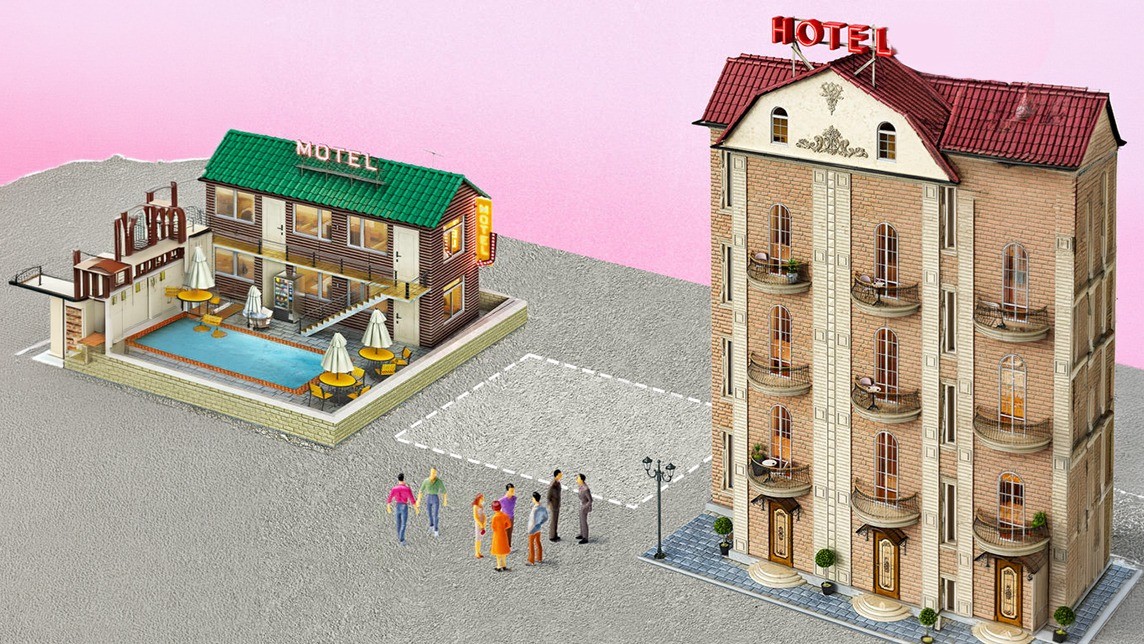

Looking past inflation, demand, and headlines to understand the real cost of running a hotel
A recent travel article asked a question many travelers have quietly been asking themselves: what happened to the $150 hotel room? Link to the article.
For years, that price point represented the dependable middle of hospitality. Not budget, not luxury. Clean, predictable, accessible. Today, that same stay often costs $180, $220, or more, even when the room itself feels largely unchanged.
The usual explanations are familiar. Inflation. Labor shortages. Post-pandemic travel demand. Rising construction costs.
All of those factors are real.
But when you look at the issue from inside a hotel instead of from the traveler’s perspective, the story becomes more complicated and far more revealing.
The disappearance of the $150 room is not just an economic story. It is an operational one.
The Simple Explanation: Inflation
Inflation is the easiest explanation and, on the surface, the most convincing. Costs rose across the economy, so hotel prices followed.
Wages increased. Utilities climbed. Insurance premiums rose. Supplies became more expensive.
Yet inflation alone does not fully explain what happened.
Hotel room pricing in many markets rose faster than underlying operating costs. More tellingly, prices often stayed elevated even after travel demand stabilized. If inflation were the only driver, rates would have softened as conditions normalized.
In many places, they did not.
That suggests something deeper than macroeconomics.
The Demand Argument
Another common explanation is demand. Travel surged after pandemic restrictions were lifted, allowing hotels to charge more.
This was true for a period often described as revenge travel.
But demand spikes are temporary by nature. What stands out is that average daily rates remained high even as occupancy normalized. Many operators chose to protect margins rather than chase full occupancy.
That behavior signals something important. Hotels were not simply charging more because they could. They were charging more because the underlying cost of operating the property had changed.
Construction Costs and the Supply Story
Some analysts point to rising construction costs as a major reason affordable hotels have become harder to build, which in turn limits the supply of lower-priced rooms.
There is strong industry evidence supporting this view. Hotel development costs have risen significantly in recent years, with construction expenses increasing faster than general inflation. According to HVS, one of the hospitality industry’s most widely cited consulting firms, hotel construction costs surged by roughly 8 percent in 2022 and 6 percent in 2023, creating a substantial headwind for developers. Link to source.
Recent development surveys show the median cost to build a U.S. hotel now averages around $219,000 per room, a level that makes many traditional midscale projects financially difficult without higher nightly rates. Link to source.
Real estate advisory firm CBRE similarly reports that hotel construction costs have increased between 10 percent and 20 percent in many markets (2023 data), constraining new supply and making affordable development harder to justify economically. Link to source.
As a result, developers increasingly favor upscale or higher-rate properties where returns better match rising capital costs.
However, construction costs alone cannot fully explain today’s room pricing. Most hotel inventory already exists. Buildings constructed years ago did not suddenly become more expensive to build, yet their nightly rates still rose.
Construction costs influence future supply, but the economics also changed inside existing hotel operations.
“The Same Room for More Money”
From a guest’s perspective, frustration is understandable. Many travelers feel they are paying more for essentially the same experience.
Inside a hotel, however, operations are not the same as they were ten years ago.
Managers are dealing with layers of new responsibility that guests rarely see:
- emergency calling compliance requirements
- cybersecurity expectations
- cloud software subscriptions
- OTA distribution costs
- insurance increases
- staffing inefficiencies
- technology integrations across multiple systems
The bed looks the same. The lobby feels familiar. But the backend has become significantly more complex and more expensive.
The industry did not simply inflate. It accumulated operational weight.
AI: The rising costs and complexity of ROI
In recent years, a new layer has begun forming on top of that already growing complexity. Artificial intelligence is rapidly entering hotel operations, often framed as the technology that will finally reverse rising costs and staffing pressure. Yet early experience across industries suggests the story may be more complicated, at least in the near term.
This matters because every generation of technology arrives with the same promise: greater efficiency. This promise is seductive: fewer staff hours, faster response times, more upsell, better guest personalization. What is less often discussed is that efficiency rarely appears immediately. Most technologies increase operational effort first as organizations learn how to integrate, govern, and manage them.
The problem is that AI usually increases operational cost before it reduces it.
Early deployments tend to start as pilots, then quickly expand into a long list of necessary “supporting work” that nobody budgets for at the beginning. That includes data cleanup and integration, security controls, monitoring, policy work, staff training, and new vendors layered into an already crowded stack. Gartner has been unusually blunt on this point, predicting a significant share of GenAI projects will be abandoned after proof of concept because of escalating costs or unclear business value, among other reasons. Link to source.
There is also a governance reality that shows up fast in regulated, safety-sensitive environments like hotels. Once AI touches customer conversations, guest data, staff workflows, or decision-making, operators start needing controls and ongoing monitoring. NIST’s AI Risk Management Framework explicitly calls for post-deployment monitoring plans, incident response, change management, and continual improvement activities. That is the unglamorous part of AI that becomes real work and real expense. Link to source.
This is why “AI ROI” is still a messy topic. Deloitte’s 2025 research frames it as a paradox: investment keeps rising, but returns can be slow or unclear, and many organizations are still trying to figure out how to measure real impact versus activity. The MIT NANDA report makes the same theme even sharper, describing a wide gap between pilots and measurable P&L impact across hundreds of initiatives it reviewed.
For hotel operators, this creates a difficult position. Ignoring AI feels risky, but adopting it aggressively introduces new expenses whose long-term return is still uncertain. Unlike mature technologies, there are few multi-year operational studies showing consistent reductions in cost per room attributable solely to AI deployment.
This reality has led some operators to reconsider a more fundamental question. Before adding new intelligence on top of hotel systems, should the underlying operational foundation itself become simpler and easier to manage?
On top of that, the costs can be volatile. AI workloads are not like traditional software where you can forecast fairly cleanly. Inference and experimentation can spike usage unexpectedly, which is why the FinOps community has been publishing guidancespecifically about controlling GenAI cost and improving the odds of positive ROI.
So, in the near term, many hotels are facing a familiar pattern: a new recurring cost category arrives with a promise of future efficiency, but without the kind of mature, property-level, audited “here’s the before-and-after P&L” proof most owners and GMs would normally demand. That does not mean AI is bad. It means the industry is early, and the cost curve tends to bend the wrong way before it bends the right way.
In that context, the conversation shifts from adopting the newest technology to reducing accumulated complexity. Efficiency may depend less on adding another tool and more on removing friction that has quietly built up over years.
What this actually feels like inside a hotel
From the outside, it may look like hotels simply decided to charge more. Inside the building, it feels very different.
A general manager does not experience inflation as an abstract concept. They experience it as a steady stream of small problems that did not exist a few years ago.
A vendor renewal arrives higher than expected. A compliance notice appears that nobody fully understands but cannot ignore. A system outage turns a smooth check-in period into a line at the front desk. A technician has to be scheduled for what should have been a simple change.
None of these events alone justify raising room rates. Together, they quietly raise the cost of running the property.
Guests see the same room. Managers see longer expense reports and fewer places left to cut.
That gap between visible experience and invisible operations is where much of today’s pricing pressure lives.
The Midscale Squeeze
The segment most affected is the midscale hotel, historically the home of the $150 room.
Luxury properties can pass along rising costs because guests expect premium pricing. Economy hotels survive through operational simplicity.
Midscale hotels sit in the uncomfortable middle. They carry many of the operational expectations of upscale brands while competing on price with economy alternatives.
They must operate complex systems without luxury margins to support them.
This is less about changing traveler preferences and more about structural economics.
The systems nobody notices until they break
Every hotel relies on systems guests rarely think about but managers depend on constantly: Internet Wifi, Cellular signal, phones, emergency dialing, elevators, alarm panels, and back-office connectivity.
When those systems work, nobody talks about them. When they fail, everything slows down and guest comments and reviews suffer immediately.
Front desks stall. Guests cannot reach staff. Night audit becomes stressful. Maintenance calls escalate. Corporate begins asking questions.
Many properties still run communications infrastructure built in layers over decades. A new requirement appears and another component is added. Regulations change and another vendor joins the stack. Hardware ages and support contracts expand.
Over time, what was once a simple system becomes a network of dependencies:
- multiple vendors
- overlapping contracts
- recurring licensing renewals
- Aging structured wiring infrastructure
- hardware only certain technicians understand
From a manager’s perspective, the problem is not technology itself. The problem is unpredictability.
Nobody wants to discover during a sold-out weekend that a critical system depends on equipment installed fifteen years ago.
Yet situations like this remain common across the industry.
Which costs are actually optional?
Public discussions often treat rising hotel costs as unavoidable external forces.
But operators increasingly recognize that some expenses are structural choices rather than inevitabilities.
Hotels generally have three responses to rising costs:
- Raise room rates.
- Reduce service levels.
- Reduce operational complexity – increase efficiency
For years, the industry relied heavily on the first option. The second quickly impacts guest satisfaction. The third is now receiving renewed attention.
The budget reality most managers face
Budget season follows a familiar pattern.
Ownership asks why expenses increased. Department heads explain they are already running lean. Managers search for savings that do not affect guest experience.
Most visible costs have already been optimized. Housekeeping cannot realistically run with fewer people. Utilities cannot be negotiated forever. Service cuts quickly show up in guest reviews.
What remains are background operational costs. Technology, compliance, and infrastructure expenses often grow quietly because no single department fully owns them.
They simply renew. Year after year.
Individually manageable. Collectively expensive.
This is why many operators are beginning to focus less on cutting service and more on simplifying the systems behind the service.
A shift towards simpler operations
Across hospitality, there is a gradual move away from hardware-bound infrastructure toward software-defined operational platforms.
The reasoning is practical.
Hardware ages on a vendor’s schedule. Software evolves on an operational schedule.
When communications infrastructure becomes centralized and easier to manage:
- fewer vendors must be coordinated
- upgrades become incremental rather than disruptive
- support overhead decreases
- analog dependencies shrink
- lifecycle-driven capital events become less frequent
None of these changes are visible to guests – but together they lower the cost of operating each room. Link to source.
A different operational approach
Some operators are beginning to rethink communications infrastructure the same way hotels previously rethought property management systems and reservations platforms.
Instead of maintaining multiple layered systems, they are moving toward platforms designed to consolidate functions that historically lived in separate places.
The goal is not modernization for its own sake. It is (cost) predictability.
When communications, compliance, and management tools exist within one operational framework:
- fewer vendors need coordination
- routine changes no longer require on-site visits
- upgrades happen gradually instead of through disruptive replacement cycles
- support becomes easier to navigate
Modern platforms should reflect this shift. They are less about adding new capabilities and more about removing accumulated complexity – and adding predictability.
For many managers, the value is not technological innovation. It is operational calm. Fewer surprises, fewer emergency fixes, and fewer budget items that grow without clear explanation.
Returning to the idea of the $150 room
The $150 hotel room disappeared slowly, not because travelers changed, but because operating a hotel became incrementally more complicated.
Each new requirement made sense on its own. Each new system solved a real problem. Over time, complexity raised the baseline cost of running a property.
Hotels responded the only way they reliably could: by raising rates.
The next phase of the industry may not be about charging more. It may be about operating more simply.
When infrastructure becomes easier to manage, when fewer systems demand attention, and when costs stop creeping upward unnoticed, managers regain flexibility. Financial flexibility, but also operational breathing room.
Affordable pricing does not return through discounts or nostalgia. It returns when the cost of running a room stops rising faster than the experience delivered inside it.
The disappearance of the $150 hotel room was not caused by one event. It was the result of many small cost increases compounded over time.
Its return will likely happen the same way.
One operational improvement at a time.