
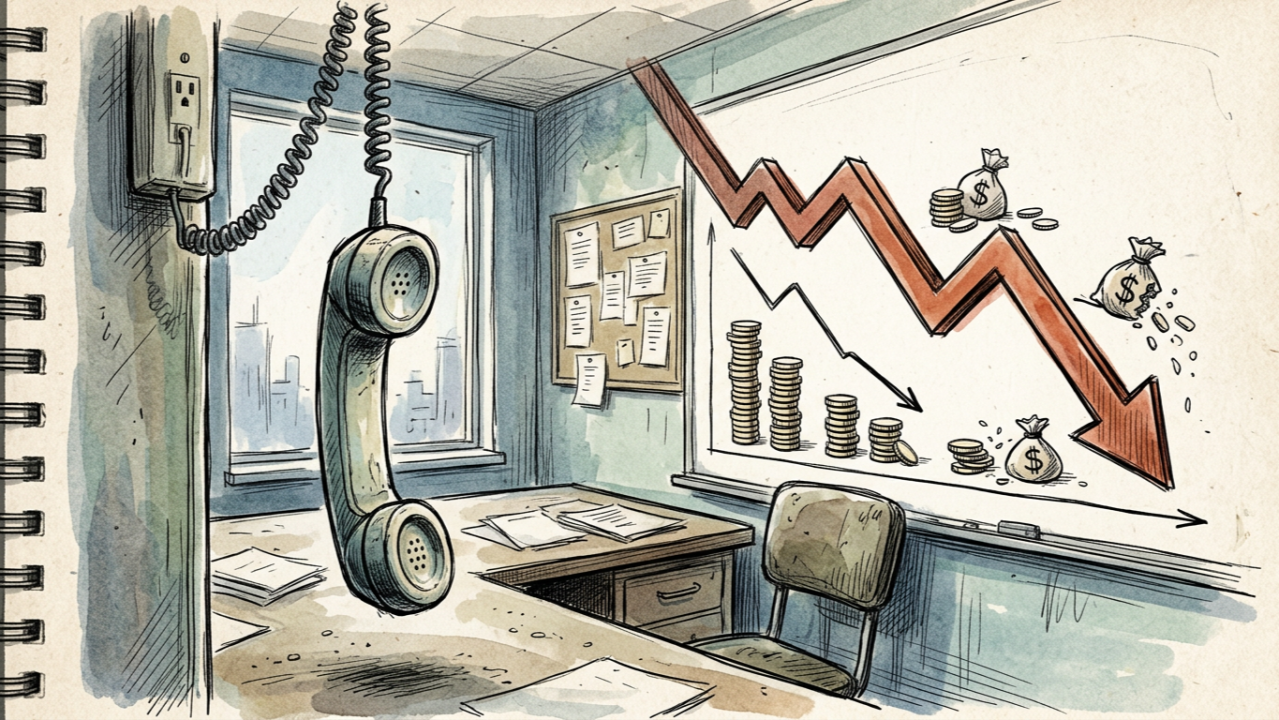

Every hotel has a number that nobody really tracks. It is not RevPAR, it is not occupancy, and it does not appear on any standard report. It is the percentage of incoming calls that ring out unanswered. Most properties assume that number is small, and that the calls that did not connect were probably not important anyway. The data suggests something quite different.
Recent industry analysis published by Hospitality.today reported that roughly 40 percent of incoming hotel calls go unanswered, and that at properties without dedicated reservations staff the figure can climb as high as 62 percent based on data from PMS provider StayNTouch. For an industry that spends enormous effort optimising channel mix, OTA contracts, and metasearch bidding, those numbers reframe the conversation. Missed calls are not isolated service blips. They look much more like a structural revenue leak that hotels have quietly accepted for years.
It helps to put a price on what is being missed. A typical OTA commission today sits in the 15 to 25 percent range, with some independent properties paying as much as 30 percent, according to a breakdown by Little Hotelier and confirmed across multiple industry sources. A direct booking, by contrast, costs the hotel roughly 4 to 4.5 percent in payment processing and direct-channel costs (SmarterTravel analysis). That gap matters per booking, and compounds across a year. An independent analysis from Lighthouse estimates that direct bookings deliver around 9 to 10 percent higher profit contribution per reservation than the equivalent OTA stay. When a guest with real intent to book picks up the phone and reaches voicemail, the hotel does not just lose the call. In many cases it loses the more profitable version of the same booking, because that guest will hang up and complete the reservation through an OTA shortly after.
The reason calls go unanswered is rarely indifference. It is operational pressure at predictable times. Reception-level data analysed by independent operators consistently identifies the same pattern: a sharp spike in missed calls during the late afternoon check-in window between roughly 3 PM and 6 PM, and a second spike on Monday mornings when teams are catching up from the weekend (CodyCo data). During those windows, the front desk is being asked to choose between the guest physically standing at the counter and the guest on the phone. That is not a problem that can be solved with a staff memo about answering more quickly. It is a capacity problem.
The picture becomes more revealing when you include the calls that originate inside the hotel itself. Housekeeping calling the front desk for a room status. The kitchen calling the bar to coordinate a service handover. Maintenance calling security after an alarm. The night auditor calling the manager on call. Many hotels have grown comfortable with the idea that the phone is “for guests,” but a meaningful portion of internal coordination still depends on it. When call routing is poorly configured or the PBX is unreliable, the operational disruption goes well beyond reservations. A recent piece by Focus Group walked through how phone instability in a hotel cascades across departments: front desk, housekeeping, F&B, and maintenance all lose the lightweight coordination layer that keeps the property running. Internal missed calls do not show up on a P&L, but they show up later as slower turn times, mistimed deliveries, miscommunicated requests, and avoidable guest complaints.
Historically, the response to all of this has been to either staff up the phone line, which rarely passes a cost-benefit review, or to accept that some percentage of calls will always be lost. That trade-off is now changing. Recent industry coverage describes how purpose-built voice AI is starting to handle the part of inbound call traffic that hotels could never economically staff for. According to figures cited in the Hospitality.today analysis, early adopters of voice AI in hospitality have reported up to 80 percent reductions in missed calls and 27 percent improvements in guest satisfaction scores. Marriott was reported to reduce abandoned calls by 67 percent following a deployment, and the Trapp Family Lodge in Vermont saw call response times fall to around 30 seconds. These are vendor-influenced numbers and should be treated as directional rather than universal, but the direction is consistent.
The key word in those examples is “purpose-built.” Generic voice bots have struggled in hospitality, because the questions guests actually ask, such as availability for specific dates, rate quotes, group blocks, late checkout, or pet policy, all require live access to the PMS. A virtual agent that cannot see real-time inventory cannot close a booking. It can only take a message, which is not meaningfully better than voicemail. The systems showing real results are the ones integrated tightly with both the PMS and the PBX, so the AI can quote a correct rate, hold inventory, and confirm a reservation inside the same conversation.
It is also worth being honest about where AI does not belong in this stack, at least not yet. Complex requests, upset guests, sensitive accessibility or medical needs, and high-touch loyalty conversations should still route to a human as quickly as possible. The argument is not that AI replaces the front desk. It is that AI handles the long tail of routine calls that the front desk was never going to get to anyway, freeing the team to do the higher-value parts of the job in person. In a sense, this is closer to what IVR and call routing were always meant to be, except finally good enough to deliver on the promise.
There is also a less glamorous point that often gets lost in the AI conversation. Voice AI sits on top of a phone system. If the underlying PBX is unreliable, poorly integrated with the PMS, or missing accurate call data, no amount of intelligence layered on top will close the leak. The properties seeing the strongest results from voice AI are typically the ones whose underlying communications platform was already in good shape. That is the half of the story that does not make headlines, and it is the half that determines whether the new technology actually delivers.
Treating missed calls like missed revenue is, in the end, largely a matter of measurement. Most hotels today do not report on call abandonment rates, time-to-answer, or after-hours call volume. Once those numbers become visible, the case for action tends to make itself. Whether the answer is better PBX configuration, a tightly integrated voice agent, an outsourced overflow team, or some combination of all three, the starting point is the same: every unanswered ring is a line item that nobody is currently reading.
GrayMatter Networks builds BrainBox, a hospitality-focused PBX platform with full PMS integration, used by hotels worldwide. To learn more, visit graymatternetworks.com.